
How to Choose the Right Size for Your Business Sign
A beautifully designed sign won’t perform well if people can’t read it.
One of the most common mistakes businesses make is choosing a sign size based only on the available space rather than considering how far away the viewer will be.
Before ordering a custom sign, think about:
- Where will it be installed?
- How far away will people be?
- Will people be walking or driving past?
- How much information needs to be displayed?
- Does the sign need to be read quickly?
1. Start With Viewing Distance
A sign beside a shop entrance can be relatively small because people may stand only a few metres away.

A roadside sign is different.
Drivers may have only a few seconds to see the message.
This means roadside signage generally needs:
- Larger lettering
- Strong contrast
- Less information
- Simple messaging
- Greater overall sign dimensions

2. Don’t Put Too Much Information on a Sign
More information doesn’t necessarily make a sign more effective.
For many business signs, the priority should be:
Business name
What you do
Phone number or website
That’s often enough.
Instead of:
JOHN’S COMPLETE BUILDING AND PROPERTY MAINTENANCE SERVICES
you could use:
JOHN’S BUILDING SERVICES
Renovations • Repairs • Maintenance
021 XXX XXXX
The second version is easier to scan.
3. Consider the Installation Location
The same business might require several different sign sizes.
For example:
Shopfront: large horizontal sign
Reception: smaller wall sign
Car park: directional sign
Roadside: large high-visibility sign
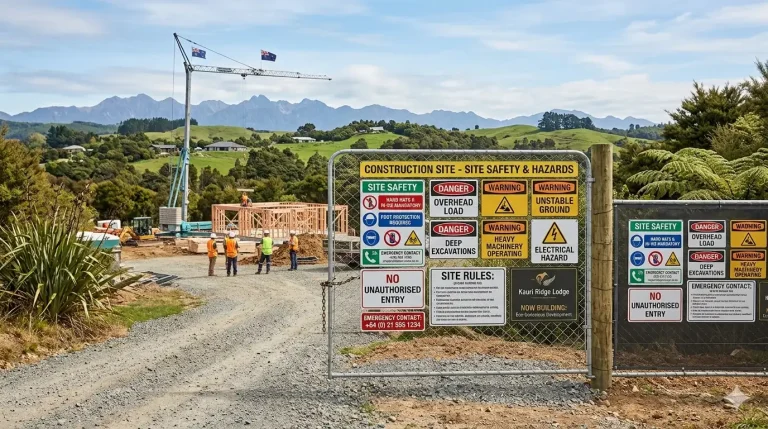
Construction fence: long-format temporary sign
Don’t try to make one size work everywhere.
4. Choose the Material After Understanding the Application
Once you’ve determined the size, consider the material.
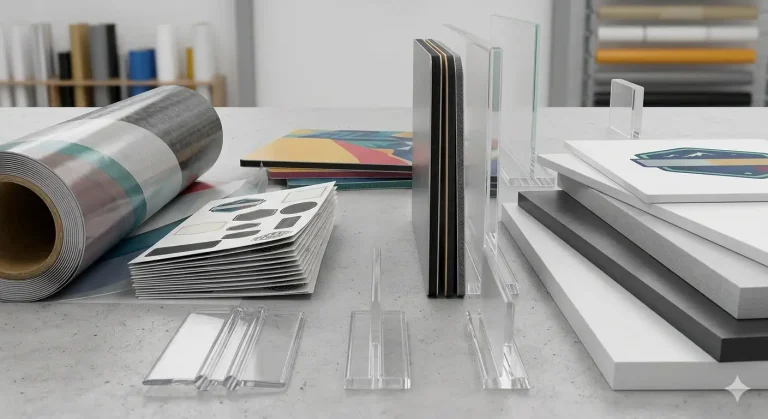
For a permanent outdoor business sign, ACM or PVC may be appropriate.
For temporary advertising, corflute can be a cost-effective alternative.
For smaller applications, vinyl stickers may be more practical.
5. Keep Important Information Away From the Edges
Always allow enough space around logos, text and important information.
A margin gives your design breathing room and helps prevent important elements appearing too close to mounting holes or edges.
6. Think About the Way People Move Past the Sign
A pedestrian has time to stop.
A driver doesn’t.
A sign outside a reception area can contain more information than a roadside sign.
Ask:
How many seconds will someone have to read this?
That question alone can dramatically improve your sign design.
Choosing the Right Sign Size
There is no single universal size that works for every business.
The correct dimensions depend on:
- Viewing distance
- Installation height
- Viewing angle
- Amount of text
- Letter size
- Background contrast
- Location
- Traffic speed
If you already know where your sign will be installed, start there and work backwards